

Living with the fear of an AIDS diagnosis can feel isolating. You might worry about how others will react, whether treatment will work, or what this means for your relationships and future. These concerns are real, and they matter.
Many people share these same feelings when facing a possible diagnosis. Therefore, knowing what AIDS involves, what causes it, and how it can be treated gives you the information you need to take control of your health.
What is AIDS?
AIDS stands for Acquired Immunodeficiency Syndrome, and it represents the most advanced stage of HIV (human immunodeficiency virus) infection.
Rather than being a single illness, AIDS is a collection of serious health conditions that develop when HIV has significantly weakened your immune system. HIV is the cause; AIDS is a possible outcome. Your immune system is your body's natural defence against infections and disease. When it becomes compromised, you may become more vulnerable to:
Serious infections that your body would normally fight off easily
Certain types of cancer
Other health complications
What causes AIDS?
AIDS develops when HIV is left untreated, or when treatment is interrupted, and the virus gradually weakens your immune system over time. As your immunity declines, your body becomes more vulnerable to:
Opportunistic infections (infections that your body would normally be able to fight off)
Severe infections that keep coming back
Certain cancers linked to a weakened immune system
Your doctor will monitor your immune health through a simple blood test called a CD4 count. This test measures the strength of your immune system. When CD4 levels drop too low (typically below 200), along with certain health symptoms, your doctor may diagnose advanced HIV disease, also known as AIDS.
Possible signs of AIDS and advanced HIV
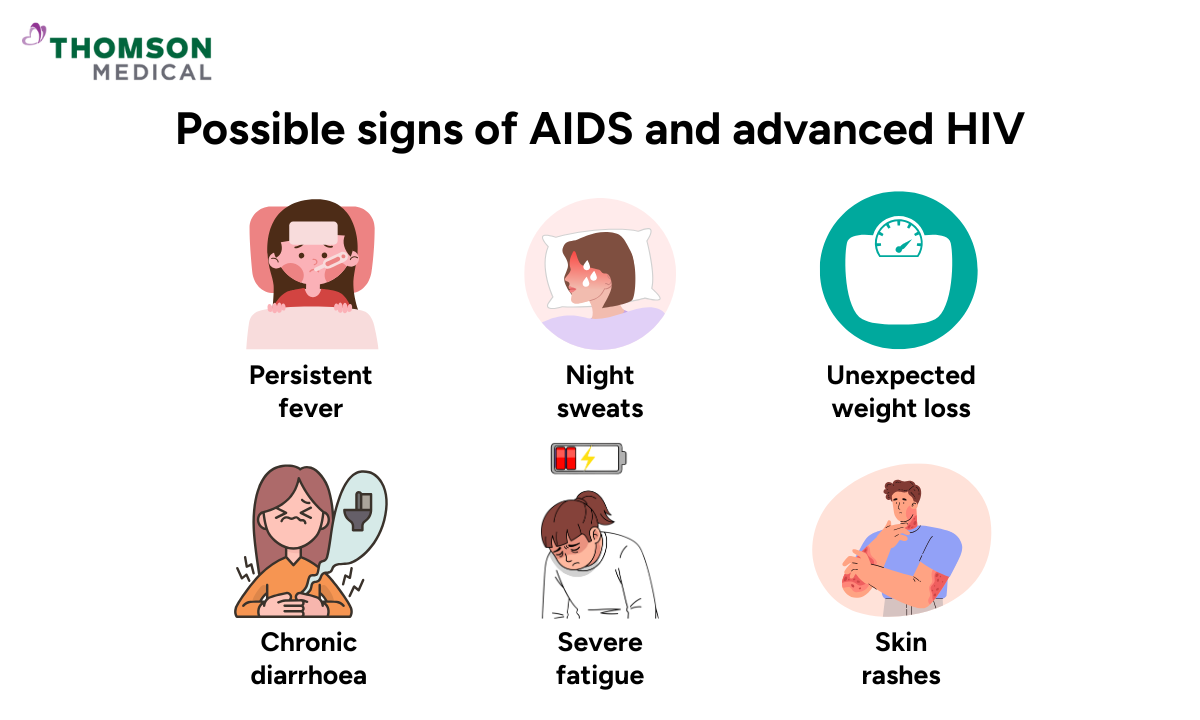
AIDS doesn't have one distinctive symptom, but instead, the signs often reflect different infections or conditions that can occur when your immune system has been weakened over time:
Persistent fever and night sweats
Unexplained weight loss
Chronic diarrhoea
Prolonged swollen lymph nodes
Severe fatigue
Recurrent infections (such as pneumonia)
Oral thrush (white patches in the mouth) or persistent mouth ulcers
Skin rashes or unusual lesions
HIV can be present in your body for years without causing noticeable symptoms, which is why regular testing is the only reliable way to know your status.
If you're concerned about HIV or would like to discuss testing options, our specialists at Thomson Medical are here to help. Request an appointment with Thomson Medical for personalised care and support.
How AIDS is diagnosed
AIDS develops when HIV progressively weakens the immune system over time, typically through several stages. Without treatment, this process can take years, but with proper care, many people with HIV never progress to AIDS.
Acute HIV infection (first few weeks after infection):
The virus multiplies rapidly, and you may experience flu-like symptoms or no symptoms at all.
Chronic HIV infection/clinical latency (can last for years):
The virus continues to reproduce at low levels. Many people feel well during this stage and may not have symptoms.
Progression to AIDS (without treatment):
When the immune system becomes severely damaged (CD4 count drops below 200 cells/mm³) or specific opportunistic infections develop, HIV advances to AIDS.
One thing to note is that the progression from HIV to AIDS is not inevitable.
Can AIDS be treated?
Currently, AIDS can be managed with antiretroviral therapy (ART), which helps control HIV and prevent it from progressing to AIDS. While there is currently no cure for HIV or AIDS, treatment has transformed this condition from a fatal diagnosis into a manageable chronic illness for many people.
Antiretroviral therapy (ART)
Antiretroviral therapy works by reducing the amount of HIV in your body, allowing your immune system to recover and function more effectively. When taken consistently, ART can:
Lower the viral load to undetectable levels
Help restore immune system function
Reduce the risk of opportunistic infections
Improve quality of life
Prevent transmission to others when viral load is suppressed
Other early treatments
Starting treatment as soon as possible after HIV diagnosis offers the greatest health benefits. Early intervention helps preserve immune function and reduces the risk of HIV progressing to AIDS. Nowadays, AIDS treatment typically requires:
Daily antiretroviral medications, often combined into a single tablet
Regular monitoring through blood tests to check viral load and CD4 cell counts
Ongoing medical consultations to assess treatment effectiveness
Management of any opportunistic infections or complications
Lifestyle support, including nutrition and mental health care
We understand this can feel overwhelming, and we're here to help you understand your options and take the next step with confidence. If you have questions about HIV, AIDS, or testing options, request an appointment with us as we are here to listen and support you in a safe, confidential space.
Our sexual health specialist
Loading...
Reduce the risk of HIV (and AIDS)
Whether you're living with HIV or want to stay HIV-negative, there are effective ways to protect yourself and others:
Use condoms consistently:
Condoms are one of the most reliable ways to prevent HIV during intercourse when used correctly.
They provide a barrier that stops the virus from passing between partners
Consider PrEP (Pre-Exposure prophylaxis):
PrEP is a medication you take before potential exposure to HIV to prevent infection. It's for people who are HIV-negative but may be at risk.
If you're HIV-negative, taking PrEP daily can reduce your risk of getting HIV by over 90%.
Know about PEP (Post-Exposure Prophylaxis)
PEP is an emergency medication you take after you think you've been exposed to HIV to prevent infection.
If you think you've been exposed to HIV, PEP can prevent infection if started within 72 hours
Understand U=U (Undetectable = Untransmittable):
When someone with HIV takes their treatment consistently and maintains an undetectable viral load, they cannot transmit HIV to others.
Get tested regularly:
Regular testing helps you know your status and take action early if needed.
Early detection means treatment can start sooner, protecting your health and preventing transmission.
Taking control of your sexual health is empowering. Remember, prevention and early detection can make all the difference in protecting yourself and those you care about.
Living with AIDS: Ways to care for yourself
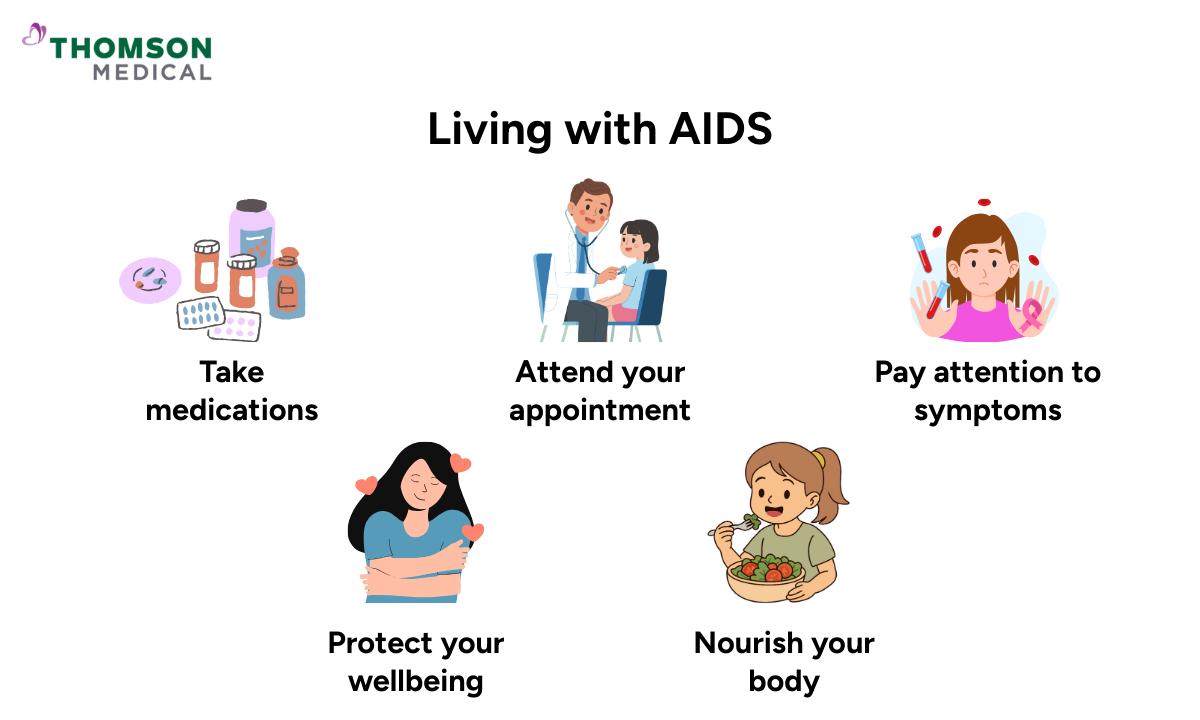
AIDS is no longer the diagnosis it once was. Many people with AIDS see significant improvements in their health and return to doing the things they love like spending time with family, pursuing their careers, and enjoying everyday moments. Beyond medication, here are some gentle ways to look after yourself:
Take medication everyday:
Consistent treatment allows your immune system to recover and strengthens your body's defences
Attend your medical appointments:
Regular check-ups help monitor your immune system recovery and viral load
Your healthcare team can spot potential issues early and adjust treatment as needed
Watch for warning signs:
Pay attention to persistent fevers, unexplained weight loss, or new infections
Contact your healthcare team promptly if symptoms develop, as early intervention makes all the difference
Protect your mental wellbeing:
Living with AIDS can feel overwhelming at times. Your mental health is just as important as your physical health in your recovery journey
Nourish your body:
Eating nutritious meals, staying gently active, and getting adequate rest all support your immune system as it heals
Small, consistent healthy choices help your body grow stronger over time
AIDS is something you're managing, not who you are. People who were gravely ill have recovered to live full, active lives. Your situation may feel difficult now, but improvement is genuinely possible. Treatment works, bodies heal, and futures exist beyond this diagnosis.
FAQ
How long can someone live with AIDS?
AIDS is no longer the diagnosis it once was. With commitment to your treatment and proper medical support, you can look forward to many years ahead. Modern antiretroviral therapy has transformed AIDS from a life-threatening condition into a manageable chronic illness. Many people diagnosed with AIDS today, who receive and stick to treatment, can expect to live into their 60s, 70s, and beyond, life spans approaching those of people without HIV.
What are the first signs of AIDS?
The signs often reflect that your body is struggling to fight off infections and illnesses:
Persistent fever and night sweats that don't go away
Unexplained weight loss (losing 10% or more of your body weight)
Extreme, ongoing fatigue that doesn't improve with rest
Prolonged swollen lymph nodes in your neck, armpits, or groin
Chronic diarrhoea lasting more than a week
White patches or unusual spots in your mouth or on your tongue (oral thrush)
Recurring infections such as pneumonia or other respiratory infections
Skin rashes or sores that don't heal
AIDS doesn't appear suddenly. It develops gradually when HIV goes untreated, usually over several years. This is why these symptoms typically appear later in the progression of HIV infection.
Does AIDS go to kids?
Yes, children can get HIV and develop AIDS, most commonly through transmission from mother to child during pregnancy, childbirth, or breastfeeding. For children born with HIV, early treatment helps their immune systems stay strong, allowing them to grow up healthy and live fulfilling lives.
Is AIDS spread by air?
No, HIV and AIDS cannot be spread through the air. You cannot get HIV by breathing the same air as someone who has the virus, and it doesn't spread through coughing, sneezing, or talking.
How is AIDS confirmed?
AIDS is confirmed through blood tests that measure your immune system function, specifically your CD4 cell count. These tests show whether HIV has progressed to AIDS.
Is AIDS spread through saliva?
No. HIV is not spread through saliva, tears, or sweat. You cannot contract HIV or develop AIDS from:
Kissing or hugging
Sharing food, drinks, or utensils
Using the same toilet seats or swimming pools
Coughing, sneezing, or casual social contact
The virus is fragile and does not survive long outside the human body.
The information provided is intended for general guidance only and should not be considered medical advice. For personalised recommendations and advice based on your unique situation, request an appointment with Thomson Medical today.
For more information, contact us:
Thomson Medical Concierge
- 8.30am - 5.30pm
- WhatsApp: 9147 2051
Need help finding the right specialist or booking for a group?
Our Medical Concierge is here to help you. Simply fill in our form, and we'll check and connect you with the right specialist promptly.
Notice:
The range of services may vary between Thomson clinic locations. Please contact your preferred branch directly to enquire about the current availability.
Get In Touch