
.png%3Fbranch%3Dprod&w=3840&q=75)
Living in Singapore means dealing with three things: 90% humidity, intense heat and constant air-conditioning switches. This combination has a negative effect on your skin.
If you've noticed your acne getting worse, unexplained rashes appearing or your eczema flaring up more frequently, it's likely that Singapore's tropical climate is probably the reason. Certain skin conditions are significantly more common here than in temperate climates, from fungal infections thriving in our humid weather to sun damage from UV exposure.
If you know what skin problems affect Singaporeans most, what causes them, and how to treat them well, you can get the clear, healthy skin you want.
What causes skin problems?
Your skin works constantly to protect and regulate your body. In Singapore's tropical climate, it faces unique challenges that can disrupt this delicate balance.
Think of your skin as having its own ecosystem. When everything works harmoniously, it produces just the right amount of oil to stay moisturised and protected. But when that balance shifts, concerns can emerge.
What might be affecting your skin:
Tropical climate:
Living in Singapore means your skin constantly battles humidity that can trap perspiration and oils, leading to clogged pores and breakouts.
Your hormones:
Natural fluctuations during your menstrual cycle, pregnancy, or menstrual transitions can influence how your skin behaves.
Sensitivities:
Your skin might be responding to something in your diet, skincare routine, or environment.
Skin allergies such as contact dermatitis and irritant contact dermatitis are common reactions that can cause redness, itching, and inflammation.
Stress:
There's a connection between your emotional wellbeing and skin health; some conditions can flare during stressful periods.
Family history:
Sometimes your genetics play a role in the skin concerns you experience – conditions like atopic eczema often run in families.
Sun exposure:
Singapore's year-round UV intensity may darken your pigmentation and create new concerns. Prolonged sun exposure can also increase the risk of skin cancer, making sun protection essential.
3 common skin problems in Singapore
We know that dealing with skin concerns can feel overwhelming, especially when you're not sure what's causing them or how to find relief. However many skin problems are manageable once you understand what you're experiencing and know what steps to take.
Acne
Acne is one of the most common skin concerns, affecting women at every stage of life – not just during the teenage years. It develops when pores become clogged with oil, dead skin cells, and bacteria. Moreover, Singapore's humid climate can intensify breakouts, as excess perspiration and oil production create an environment where acne thrives.
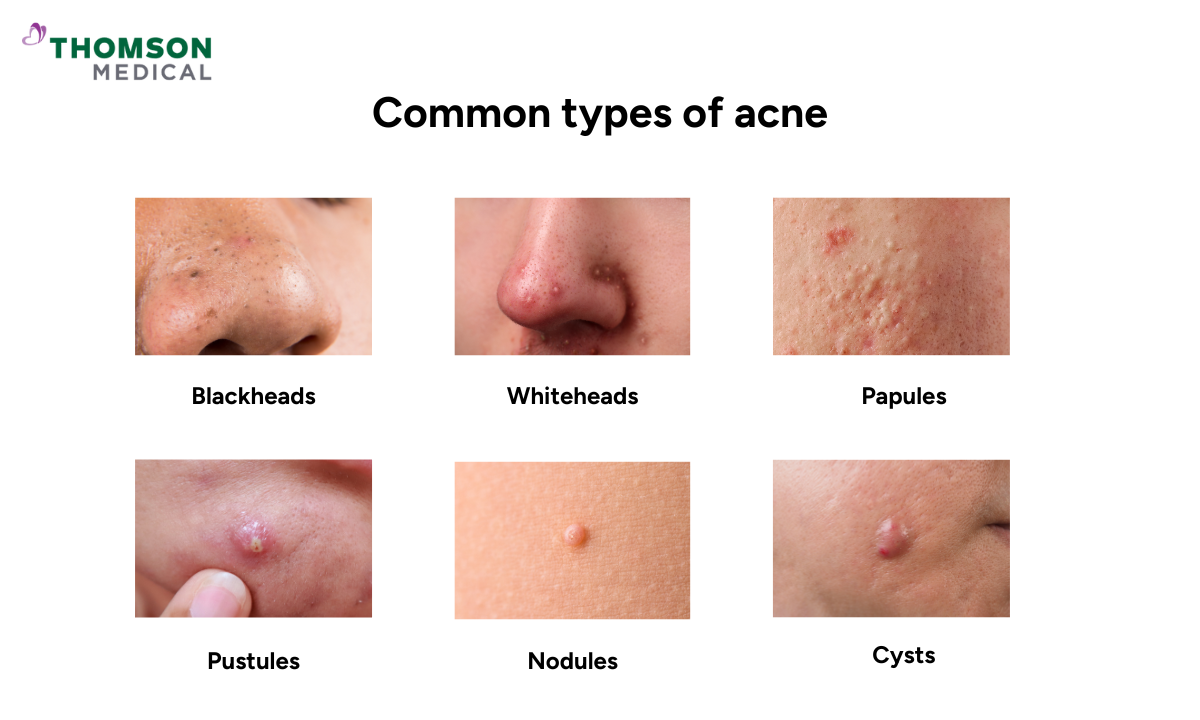
Different types of acne
Acne isn't one-size-fits-all, and recognising what you're experiencing helps guide the most effective approach for your skin.
Non-inflammatory acne appears without redness or swelling. The main types are:
Blackheads:
Small, dark spots where pores are clogged but remain open – often appearing on your nose, chin, and forehead
Whiteheads:
Closed pores that create small, flesh-coloured bumps
Inflammatory acne involves redness, swelling, or discomfort. Common types include:
Papules:
Small, tender red bumps without a visible centre
Pustules:
Red bumps with white or yellow centres
Nodules:
Large, painful lumps that form deep beneath the surface
Cysts:
Deep, pus-filled lumps that may lead to scarring without proper care
You'll most commonly notice acne on your face (particularly the T-zone), chest, back, and shoulders.
How to manage mild vs. severe acne
The path to clearer skin depends on what you're experiencing. Mild acne often responds well to consistent, gentle care, whereas moderate to severe acne may benefit from medical support.
For mild acne, you might start with the following habits:
Cleansing twice daily with a gentle, non-comedogenic cleanser
Using products that contain salicylic acid or benzoyl peroxide
Avoiding touching or picking at affected areas
Choosing oil-free skincare options
For persistent or severe acne, your skin specialist can recommend these approaches:
Prescription treatments, including topical retinoids or oral medications
Professional treatments such as chemical peels or laser therapy
Remember, achieving clear skin is a journey, not a destination. Most acne treatments require at least 6 to 8 weeks before you'll notice visible improvement. Be patient with yourself and your skin, as consistency truly makes the difference.
If your acne isn't improving with home care or you'd like to explore more effective treatment options, schedule an appointment with Thomson Specialist Skin Centre. Our dermatologists can assess your skin condition and recommend a tailored treatment plan to help you achieve clearer, healthier skin.
Eczema (atopic dermatitis)
.png?branch=production)
Eczema is a chronic skin condition that causes dry, itchy, and inflamed patches on your skin. If you or your child have been struggling with persistent itching and red, scaly skin that just won't seem to settle, you're likely dealing with eczema – and we understand how frustrating this can be.
Eczema is particularly common in Singapore, affecting both children and adults. It's linked to an overactive immune response and a weakened skin barrier that allows moisture to escape and irritants to enter.
Eczema symptoms to watch for
Eczema symptoms can vary from mild to severe, and they often come and go in cycles. The most common signs you might notice include:
Intense itching:
Often worse at night, which can make it difficult for you or your child to sleep
Red or brownish-grey patches:
Commonly on the hands, feet, neck, and inside the elbows and knees
Dry, scaly, or thickened skin:
Areas that have been scratched repeatedly may develop thick, leathery patches
Small, raised bumps:
These may leak fluid and crust over when scratched
Eczema in children often appears on the face and scalp, while adults typically experience it in the creases of elbows and knees.
Managing eczema flare-ups
While there's no cure for eczema, you can manage flare-ups and keep your or your child's skin more comfortable with the right approach.
To prevent and reduce flare-ups, try these steps:
Moisturise regularly with thick, fragrance-free creams, especially right after bathing
Take short, lukewarm showers instead of hot baths
Use gentle, fragrance-free soaps and detergents
Dress in soft, breathable fabrics like cotton
Identify and avoid your personal triggers
With consistent care and the right strategies, many people find they can significantly reduce how often flare-ups occur and how severe they become.
Hives (urticaria)
.png?branch=production)
Hives are raised, itchy welts that appear suddenly on your skin, and we know how unsettling they can be. If you've noticed red or skin-coloured bumps that appear out of nowhere and change shape, you're experiencing hives. While they can be worrying, they're usually manageable.
Hives are quite common in Singapore. They happen when your body releases histamine in response to something it perceives as a threat, causing blood vessels to leak fluid into your skin.
What triggers hives?
Many different factors can trigger hives, and sometimes it takes patience and observation to discover what's affecting you.
Possible triggers include:
Food sensitivities:
Shellfish, eggs, nuts, and certain fruits are common culprits
Medications:
Antibiotics and pain relievers can occasionally cause reactions
Heat and perspiration:
Singapore's climate can trigger heat-induced hives for some women
Insect bites or stings:
These triggers are common in our tropical environment
Stress:
Emotional strain can prompt or intensify flare-ups during challenging periods
Physical pressure:
Tight clothing or scratching may provoke a response
Hives usually appear within minutes to hours after contact with a trigger and may last anywhere from a few hours to several days.
How to manage hives?
Most hives are uncomfortable but resolve naturally. However, certain symptoms require prompt medical attention. Consider seeking immediate care if you experience:
Difficulty breathing or swallowing, as this may signal a severe allergic reaction
Swelling of your lips, tongue, or throat, which is another indicator of a serious response
Dizziness or feeling faint, as these sensations may suggest dropping blood pressure
Hives persisting beyond six weeks, also known as chronic hives, which warrant medical evaluation
For mild hives, you can find relief by taking antihistamines, applying cool compresses to affected areas, wearing loose clothing, and avoiding known triggers once identified.
If frequent skin issues are disrupting your daily life or you're struggling to identify what's causing them, schedule an appointment with Thomson Specialist Skin Centre. Our dermatologists can help you pinpoint your triggers and develop a treatment plan as per your condition.
Our skin specialist in Singapore
Loading...
When to see a dermatologist?
While many skin concerns can be managed at home, there are times when seeing a specialist can truly make a difference to your wellbeing and comfort.
It’s time to see a dermatologist if:
Your skin condition is affecting your daily life, confidence, or emotional wellbeing
Home treatments haven't brought relief after several weeks of consistent care
Your symptoms are worsening or spreading to new areas
You're experiencing severe discomfort, widespread rashes, or signs of infection
You're uncertain about what you're dealing with, or concerns keep returning
You feel ready for prescription treatments that may offer stronger support
A dermatologist can help identify what's affecting your skin and work alongside you to develop an approach tailored to your individual needs. Seeking medical advice early can sometimes help you find relief more efficiently – and you deserve to feel comfortable in your skin.
FAQ
Are skin problems contagious?
Not all skin problems are contagious – it depends on the specific condition. Eczema and acne are not contagious, so you can't catch them from someone else. Certain skin conditions like fungal infections (ringworm), bacterial infections (impetigo), and viral infections (warts, cold sores) can spread through direct contact.
Hives themselves are not contagious, but they can sometimes be triggered by infections like a cold virus or fungal infection. While the hives won't spread to others, the underlying infection that caused them might be contagious.
If you're unsure whether your skin condition can spread to others, consult a doctor for proper diagnosis and advice.
How long does it take for skin problems to heal?
Healing time varies widely depending on the specific condition, its severity, and how you treat it. Some skin issues resolve within days, while others require weeks or months of consistent care. Factors that influence healing include:
The type and severity of the condition
How quickly you begin appropriate treatment
Your overall health and immune system
Whether you avoid triggers and follow your treatment plan consistently
If you're not seeing improvement after several weeks of home care, or if your condition is worsening, it's best to consult a dermatologist for a personalised treatment plan.
Can diet affect my skin condition?
Yes, diet can play a role in some skin conditions. Common triggers include:
Dairy and high-glycemic foods for acne
Shellfish, eggs, and nuts for hives
Certain foods that may worsen eczema flare-ups
Keeping a food diary can help you identify patterns.
Is it safe to use over-the-counter creams for skin problems?
Over-the-counter creams can work well for mild conditions like minor acne or dry skin. However, it's important to choose products appropriate for your specific condition. If symptoms worsen or don't improve after several weeks, consult a dermatologist.
Why do my skin problems keep coming back?
Skin concerns often return when their underlying triggers aren’t fully addressed. Factors like stress, hormones, environmental changes, genetics, or using products that don’t suit your skin can all contribute. Sometimes, stopping treatment too early or not following a consistent routine can also cause flare-ups.
If your symptoms persist or worsen, it may help to speak with a dermatologist who can understand your history and guide you toward long-term relief.
Should I use sunscreen if I have skin problems?
Absolutely, especially in Singapore's climate. Sunscreen protects healing acne from darkening into scars, prevents dark spots from worsening, and reduces irritation in sensitive skin. Choose a gentle, non-comedogenic formula with SPF 50 or higher.
What's the difference between hives and a regular rash?
Hives are raised, itchy welts that appear suddenly and change shape or location within hours. Regular rashes stay in one place, have a consistent appearance, and develop gradually. Hives usually result from allergic reactions, while rashes have various causes.
The information provided is intended for general guidance only and should not be considered medical advice. For personalised recommendations and tailored advice based on your unique situation, please consult a specialist at Thomson Specialist Skin Centre. Schedule an appointment with Thomson Specialist Skin Centre today.
Dr Tan Hiok Hee
Dermatology (Skin)
Thomson Specialist Skin Centre (Novena Specialist Center)
English, Mandarin
.png%3Fbranch%3Dprod&w=640&q=75)